
Existing covering tear-off
Confirm how many layers are assumed, what is removed, how landscaping and openings are protected and where debris is contained.
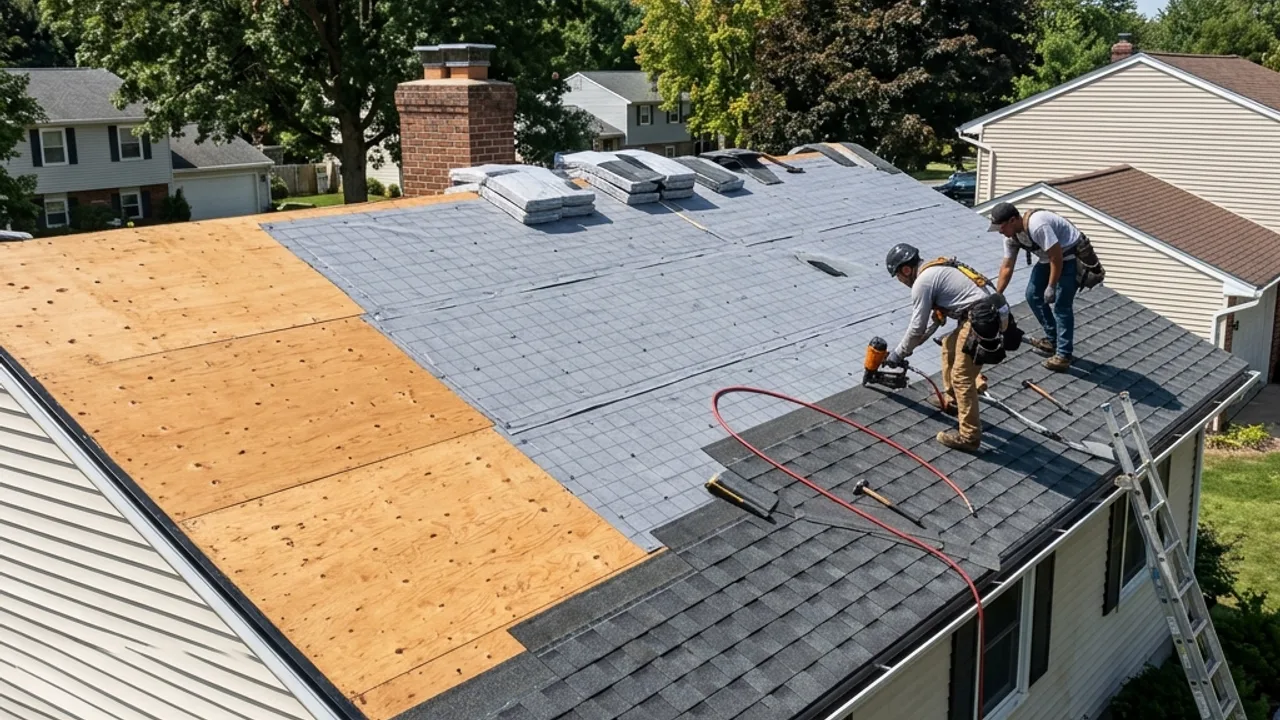
Tampa roof condition and scope guidance
A replacement total is difficult to judge until every estimate describes the same roof assembly. Compare tear-off, deck allowances, underlayment, flashing, ventilation, covering, permits and cleanup together.
Roof replacement becomes the right page when the decision concerns the whole covering or assembly rather than one isolated defect. The homeowner may have widespread deterioration, repeated repairs, storm findings across several slopes, an insurer or property-sale deadline, or estimates that differ by thousands of dollars without explaining why. The first review should gather roof shape, approximate area, covering type, known layers, access, previous work and any written findings already available.
A complete scope must make the unknowns visible. Decking cannot always be fully assessed before tear-off, but the estimate can still state an included allowance, unit rate or approval process. The same applies to flashing transitions, ventilation corrections and concealed conditions. Replacement should not be reduced to one product name or warranty headline because the supporting layers and installation details determine what is actually being compared.
What belongs in the work
Read the estimate from the existing roof downward, then back up through the new assembly and final cleanup.
Confirm how many layers are assumed, what is removed, how landscaping and openings are protected and where debris is contained.
State the sheathing standard, included quantity or unit rate, approval point and how unplanned structural findings are handled.
Name the dry-in layers, secondary water barrier where specified, drip edge and new or reused flashing at walls, valleys and penetrations.
Identify the product, fastening method, starter, field material, hips, ridges, ventilation, manufacturer details and installation warranty.
Decision framework
Two estimates can use the same headline material yet price different work. Normalize the scope before treating the totals as alternatives.
Compare slopes, penetrations, waste assumptions, tear-off layers and areas that an aerial measure may not fully explain.
Look for decking, fascia, soffit, structural work, equipment, interior protection and other conditions excluded from the base price.
Confirm permit responsibility, inspection sequence, cleanup standard, magnetic sweep, final documents and separate product and workmanship terms.
Record roof planes, pitch, penetrations, access, covering, visible condition and any known prior layers.
Choose the complete dry-in, flashing, ventilation and covering system rather than a product in isolation.
Set written rates and approval steps for decking or concealed work that cannot be quantified before tear-off.
Complete required inspections, property cleanup, final documentation and warranty delivery against the agreed scope.
A detailed scope protects the comparison before demolition makes hidden conditions urgent.
The estimate should name every major assembly layer and whether old materials are removed, replaced or retained.
Decking and concealed-work rates establish a decision path before the roof is open to weather.
The contracting party should state who files, schedules inspections and provides closeout evidence for the property jurisdiction.
A Tampa mailing address may sit inside the City of Tampa or another Hillsborough County jurisdiction, so the permit path should follow the actual property rather than the city name in the address. Ask the contractor to state the authority, permit responsibility and required inspections in the agreement. Verify the business and license through Florida DBPR using the name that will appear on the contract and permit.
Weather planning also belongs in the replacement method. The scope should explain dry-in sequencing, overnight protection, material staging and what happens if conditions change after tear-off. Avoid promises that any roof is hurricane-proof. The useful question is whether the specified assembly and installation comply with the applicable code and product approvals for that project.
Also compare Roof Inspection and Storm Damage Roofing if the scope changes.
Use these questions with the roof replacement findings and written scope. Compare a complete replacement scope covering tear-off, deck allowances, underlayment, flashing, ventilation and permits.
Choose the neighborhood for jurisdiction, access and roof-context prompts before comparing a Tampa replacement scope.
Roof Replacement enquiry
Put the roof replacement findings and scope questions in writing
Share the Tampa property, roof condition and the decision you need clarified before accepting a roof replacement scope.