
Post-storm inspection
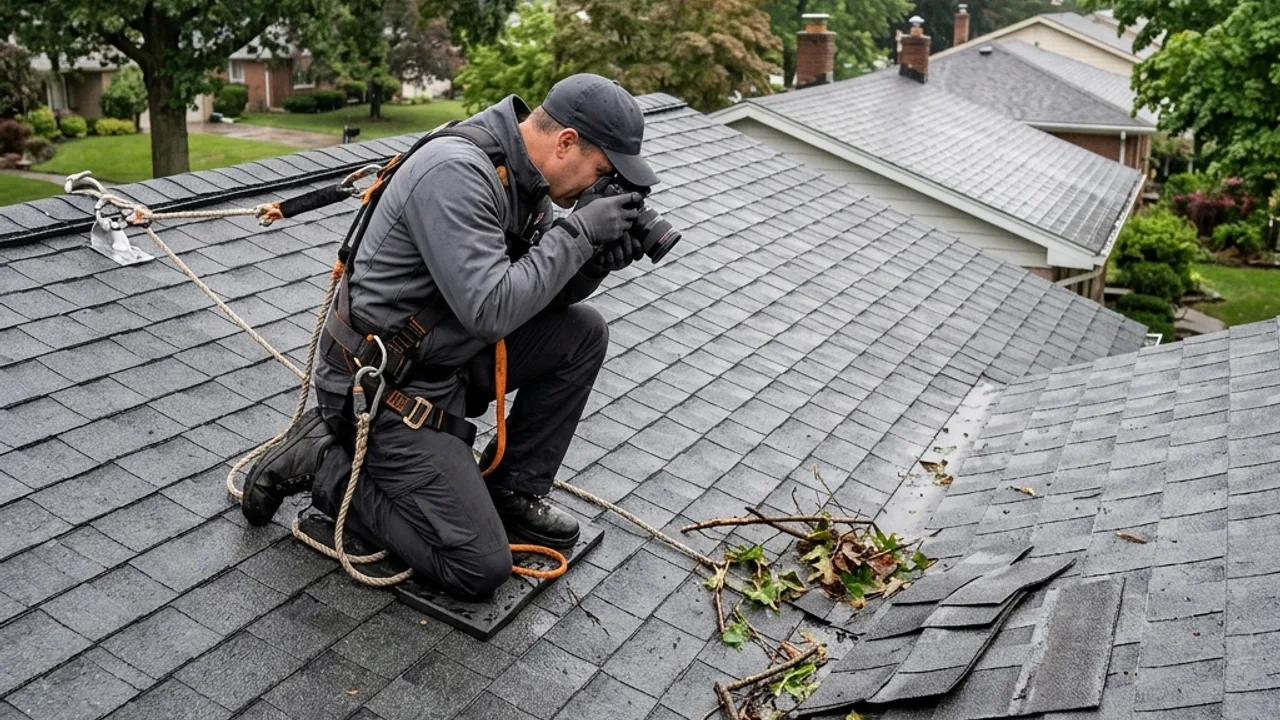
Record visible covering, edge, flashing, penetration, drainage and interior evidence with location notes and clear access limitations.
Tampa roof condition and scope guidance
After wind, debris or water entry, protect people first and document what can be seen safely. The roofing scope should address condition and weather protection without promising an insurance outcome.
Storm damage roofing begins when wind, falling material or driven rain creates a new symptom or raises concern about the roof envelope. The homeowner may see missing covering from the ground, ceiling water, debris impact, displaced edge material or no obvious damage at all. Do not climb onto a wet or unstable roof. Record the event time, affected rooms, safe exterior views and any immediate water-entry concern for the first conversation.
The roofing professional should separate emergency weather protection, inspection findings and permanent work. A temporary measure can reduce further entry without establishing the complete repair. Condition evidence also remains separate from the insurer's interpretation of the policy. Keep dates, photos, invoices and written findings organized, but do not treat a contractor opinion as a guarantee that a claim will be accepted or paid.
What belongs in the work
The first scope should deal with safety and water entry, then define what further inspection or permanent work is justified.
Record visible covering, edge, flashing, penetration, drainage and interior evidence with location notes and clear access limitations.
State the protected area, attachment method, expected limitation and responsibility for later removal or permanent repair.
Describe the affected roof area, compatible replacement material, fastening and transitions to undisturbed work.
Keep dated images, observations, material details and invoices together while leaving policy interpretation to the insurer.
Decision framework
The roof condition and policy response are connected in the homeowner's timeline but require different decision makers and documents.
Prioritize active water entry, electrical or ceiling hazards and safe temporary protection before cosmetic review.
Require findings that support the proposed repair area or replacement recommendation and identify what remains uncertain.
Provide accurate condition records to the insurer, then wait for its coverage decision rather than accepting a roofing promise about payment.
Avoid roof access, damaged electrical areas and unstable ceilings, and use emergency services where life or property hazards require them.
Capture event timing, water entry and safe views before conditions change or temporary protection covers the area.
Document any temporary work, its limits and the point when a permanent assessment can proceed.
Compare repair or replacement scope, contractor verification, permits and insurance communication as separate written steps.
A calm evidence path helps the homeowner act on real risk without turning weather into a sales deadline.
Immediate language stays focused on people, active water entry and temporary protection rather than a product sale.
Photos and notes identify what was visible, when it was recorded and which areas could not be safely inspected.
The roofing scope describes condition and work while the insurer retains responsibility for policy interpretation.
Summer storms can combine wind, heavy rain and rapid changes in site conditions. An observation made from the ground during the event may differ from a later dry inspection, so keep both in the record and label them accurately. Repeated roof access during unsettled weather can add risk and does not create better evidence if the surface, ladder position or surrounding area is unsafe.
For permanent work, confirm the actual jurisdiction, contractor license and written permit responsibility. Emergency protection and final repair can have different scopes, prices and documentation, so retain both agreements rather than assuming the first invoice describes the completed roof outcome.
Also compare Asphalt Shingle Roofing and Metal Roofing if the scope changes.
Use these questions with the storm damage roofing findings and written scope. Triage wind, debris and water-entry concerns with safe documentation and a written repair or replacement scope.
Choose the neighborhood for access, property and jurisdiction prompts when organizing a Tampa storm roofing enquiry.
Storm Damage Roofing enquiry
Put the storm damage roofing findings and scope questions in writing
Share the Tampa property, roof condition and the decision you need clarified before accepting a storm damage roofing scope.