
Leak tracing
Follow the likely path from the interior symptom to roof junctions, penetrations, valleys and laps instead of treating the stain as the entry point.
Tampa roof condition and scope guidance
Start with the likely water path, not only the stain below it. A useful repair scope identifies the roof area, defect, materials, access and conditions that would change the recommendation.
Roof repair is the useful starting point when water appears in one room, a few shingles or tiles are displaced, sealant has failed around a penetration, or an earlier patch has not solved the problem. The first conversation should establish when the symptom appears, where it is visible, what sits uphill from it on the roof and whether anyone has already worked on that area. Those details keep a repair enquiry focused without pretending the source can be diagnosed from a ceiling mark alone.
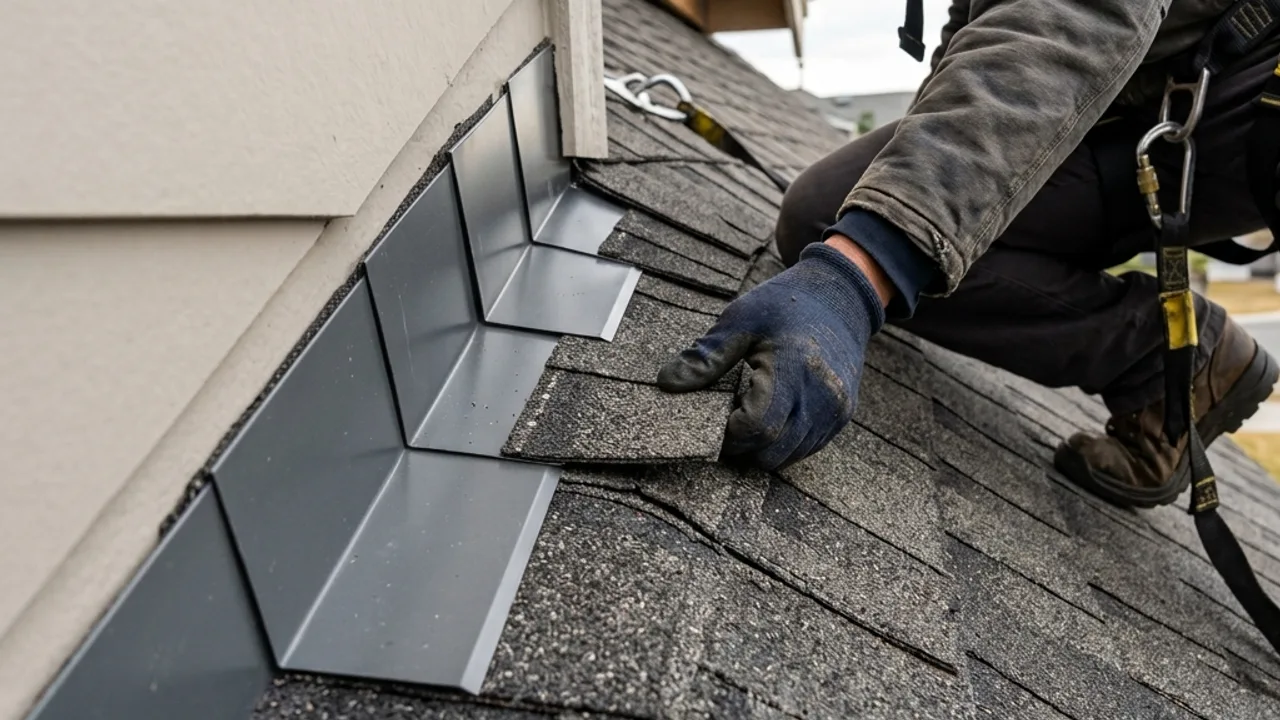
The roofing professional may need to trace covering laps, valleys, wall or chimney flashing, pipe boots, vents and attic evidence before defining the repair boundary. Ask for the findings to be separated from the proposed work. If replacement is raised, the written explanation should show why an isolated repair is unlikely to hold or why conditions extend beyond the first visible defect.
What belongs in the work
A repair estimate becomes easier to compare when it names the exact defect, the disturbed area and what remains outside the scope.
Follow the likely path from the interior symptom to roof junctions, penetrations, valleys and laps instead of treating the stain as the entry point.
Record which step, wall, apron, valley or penetration flashing is being repaired and how surrounding materials will be lifted and reinstated.
Name the shingles or tiles to be removed, reset or replaced, including any compatibility limits caused by age, profile, color or discontinued products.
Specify work around vents, pipe boots or roof-mounted equipment and clarify whether another trade must disconnect or reseal equipment.
Decision framework
The total is only one part of the repair decision. Use the findings to test whether the proposed work addresses the probable entry path and protects the surrounding assembly.
Check the measured or described roof area, the materials disturbed and the transition between new and existing work.
Ask how wet or deteriorated decking, concealed underlayment damage or incompatible old material would be handled and priced.
Request the condition that would cause the contractor to stop, expand the repair or recommend a broader replacement scope.
Record the room, timing, rain or wind direction, roof covering and any previous patch near the symptom.
Review the safe exterior and interior evidence, then trace junctions and penetrations that can feed the observed area.
Set out the repair area, materials, access, protection, disposal, exclusions and any allowance for concealed damage.
Verify the contractor, permit position if relevant, payment stages and workmanship terms before authorizing work.
The most useful proof is a repair scope that can be traced back to recorded roof findings.
The proposed repair should explain the probable entry route and why the selected area is sufficient.
A written trigger for concealed damage prevents an open-ended repair from changing without a decision point.
Check the contracting business and license status through Florida DBPR before accepting the scope.
A roof can appear dry during a calm shower and leak when wind pushes water across laps, beneath damaged covering or against wall and penetration details. Tell the roofing professional whether the symptom followed a particular wind direction or storm pattern. That observation is not a diagnosis, but it can help focus the inspection sequence and prevent a surface-only patch from becoming the default answer.
Also confirm the property jurisdiction before assuming a permit route. Some isolated repair work may be treated differently from a broader reroof, and the written scope should identify responsibility for any required permit or inspection rather than leaving it to assumption.
Also compare Roof Replacement and Roof Inspection if the scope changes.
Use these questions with the roof repair findings and written scope. Assess and scope leaks, damaged coverings, flashing faults and isolated roof defects before they spread.
Choose the neighborhood for property, access and jurisdiction prompts that can shape a Tampa roof repair enquiry.
Roof Repair enquiry
Put the roof repair findings and scope questions in writing
Share the Tampa property, roof condition and the decision you need clarified before accepting a roof repair scope.