
Standing-seam roofing
Name panel width, seam profile, metal and coating, clip or attachment system, substrate and details for ridges, eaves and rakes.
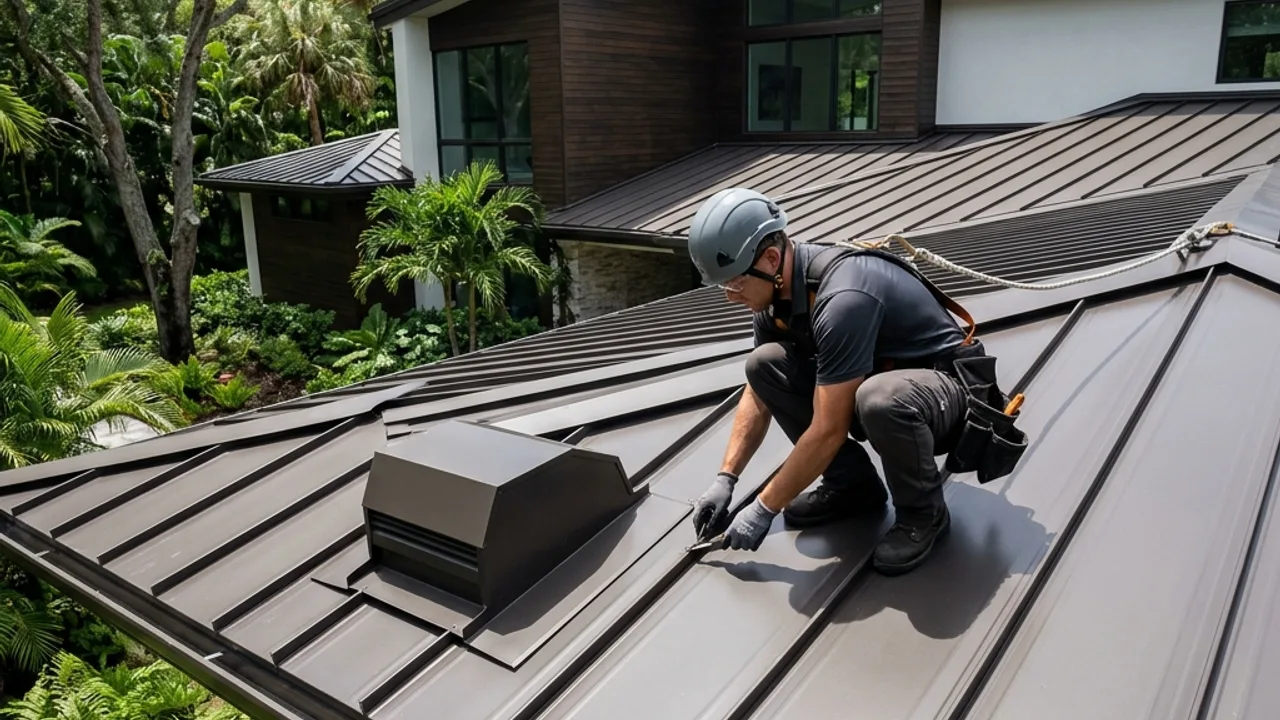
Tampa roof condition and scope guidance
Metal roofing is a family of systems, not one material choice. Panel profile, seam, coating, attachment, edges, penetrations and substrate compatibility all change the scope.
Metal roofing is relevant when a homeowner is considering a full roof change, repairing an existing panel system or comparing standing-seam and exposed-fastener options. The first review should identify the current covering, roof geometry, pitch, deck or substrate, nearby exposure, penetrations, ventilation and whether the proposal places metal over an existing layer or begins with tear-off.
A standing seam with concealed clips behaves differently from an exposed-fastener panel, and coatings, metals, seam heights and edge systems vary within each category. Ask for the tested or approved assembly and compatible accessories, not a generic statement that the roof is metal. Repair questions also need the existing panel profile, fastener condition, corrosion evidence and ability to obtain compatible material.
What belongs in the work
The written scope should identify the panel and every detail that secures, drains and closes the system.
Name panel width, seam profile, metal and coating, clip or attachment system, substrate and details for ridges, eaves and rakes.
Specify panel profile, fastener and washer, placement, lap treatment and the maintenance expectations for exposed attachments.
Locate damaged panels, loose or aged fasteners, sealant joints, corrosion or flashing faults and state whether replacement material is compatible.
Detail boots, curbs, sidewalls, endwalls, valleys and transitions using components intended for movement and the selected panel system.
Decision framework
Long field panels still depend on short junction details, and thermal movement makes those transitions part of the system choice.
Compare concealed clips, exposed fasteners, seam formation, spacing and substrate requirements rather than relying on thickness alone.
Identify the base metal, protective coating, cut-edge treatment and environmental limitations stated for the actual product.
Ask how ridges, edges, long runs, penetrations and adjoining roof materials accommodate movement while remaining weather tight.
Record roof shape, pitch, substrate, existing layers, penetrations, drainage, access and exposure conditions.
Choose the panel family, material, coating, seam or lap and attachment method that fit the documented roof.
Draw or list edges, transitions, penetrations, valleys, ventilation and interfaces where generic panel pricing is incomplete.
Review product approvals, installer scope, permit responsibility, exclusions and separate workmanship and material terms.
A sample panel cannot show whether the proposed attachments, transitions and accessories form one compatible assembly.
The quote names profile, seam, base metal and coating so product approval and warranty information can be checked.
Clips, fasteners, flashings and long-run transitions are selected with thermal movement and the roof geometry in mind.
Existing panel profile, finish and fastening are documented before a replacement section is promised to integrate.
Coastal air, intense sun, heavy rain and different distances from salt exposure can affect the questions asked about metals, coatings, cut edges and dissimilar materials. Do not assume one coating statement applies equally to every property. Ask for the product's written environmental limitations and confirm that flashings and fasteners are compatible with the selected panel material.
Metal can also change the conversation around tear-off, substrate and ventilation. If an estimate proposes installation over an existing covering, require the method, approvals, deck condition assumptions and edge details in writing. Confirm the actual jurisdiction, permit route and contractor license before accepting the installation agreement.
Also compare Tile Roofing and Roof Repair if the scope changes.
Use these questions with the metal roofing findings and written scope. Compare metal panel profiles, coatings, attachment, flashing and compatibility for the specific roof and exposure.
Choose the neighborhood for exposure, property and jurisdiction prompts when comparing a Tampa metal roofing system.
Metal Roofing enquiry
Put the metal roofing findings and scope questions in writing
Share the Tampa property, roof condition and the decision you need clarified before accepting a metal roofing scope.